All Saints Bedworth Learning and growing together to be the best that we can be
Zones of Regulation
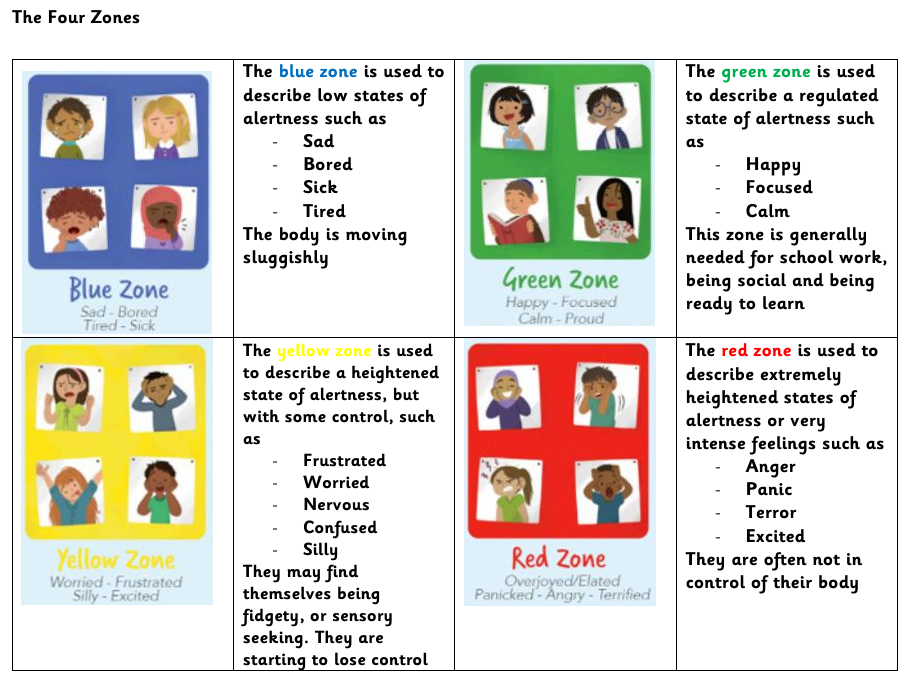
The Zones of Regulation is a framework that helps children recognise and manage their feelings and emotions. This approach teaches self-regulation—being in the best state of alertness for learning and social interaction. When children can identify their emotions and use strategies to manage them, they are better equipped to cope with stress, build resilience, and succeed in school and life.
The impact of the Zones of Regulation approach
• Supports Emotional Literacy: Many children struggle to name and understand their feelings. Zones give them a simple, visual language to do this.
• Improves Readiness to Learn: When children can regulate emotions, they are calmer, more focused, and better able to engage with lessons.
• Reduces Behavioural Incidents: By teaching proactive strategies, children learn to manage frustration or anxiety before it escalates.
• Inclusive for All Needs: Particularly helpful for children with SEND, autism, or those who find transitions and sensory input challenging.
How do we support Zones in School?
• Classroom Displays: Visual charts of the Zones to help children check in.
• Zones Language: Staff model phrases like “I’m in the Yellow Zone because I’m feeling worried.”
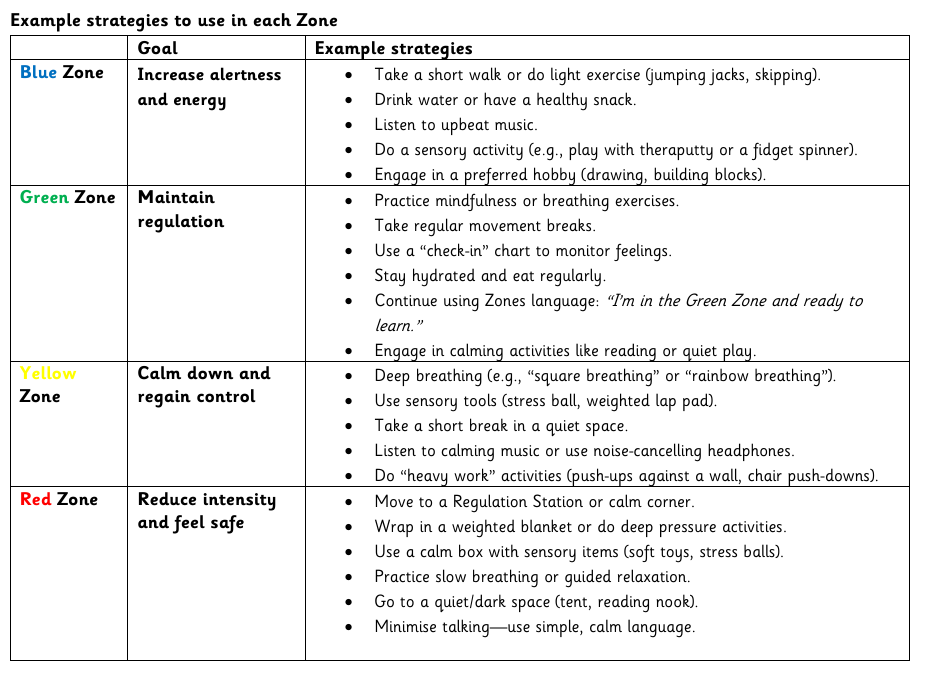
• Toolboxes: Zones of Regulation toolboxes with sensory aids (stress balls, theraputty), breathing cards, and calming activities.
• Regulation Stations: Designated calm spaces where children can go to use strategies and return to the Green Zone.
• Daily Check-ins: Children identify their Zone at the start of the day and after breaks.
How parents and carers can support at home
✔ Model your own feelings using Zones language.
✔ Observe and intervene early when your child is in the Yellow Zone.
✔ Practice calming strategies in the Green Zone.
✔ Use books/films to discuss which Zone characters might be in.
✔ Display Zones visuals at home and check in regularly.
✔ Praise your child for identifying and managing their Zone.
✔ Create a “calm box” with sensory tools.
✔ Be consistent, empathetic, and maintain routines.